Toolkit
Feb 28, 2020
In the Central American Dry Corridor, climate migrations have become the only survival strategy. Men and women must migrate to survive, in most cases, women suffer the worst impacts. In 2017, InspriAction and Christian Aid commissioned a study to understand the gendered impacts of climate change and migration in the Dry Corridor. With research led and […]
In the Central American Dry Corridor, climate migrations have become the only survival strategy. Men and women must migrate to survive, in most cases, women suffer the worst impacts.
In 2017, InspriAction and Christian Aid commissioned a study to understand the gendered impacts of climate change and migration in the Dry Corridor. With research led and conducted by WEDO and the Professional Services Cooperative for Social Solidarity (Cooperativa Autogestionaria de Servicios Profesionales para la Solidaridad Social R.L., CoopeSoliDar R.L), this report examines the multi-directional relationship between the deterioration of habitats and livelihoods caused by climate change, the migration phenomenon in the Dry Corridor and gender inequality in that region.
The analysis also includes other cross-cutting economic factors, such as energy and extractive mega-projects, and social triggers, such as poverty and violence, which are essential in understanding the migration phenomenon and the patterns of inequality in the region.
Download the full study (Spanish)
Download the executive summary (Spanish)
Download the infographic (Spanish)
Download the report (English)
Download the executive summary (English)
Download the infographic (English)
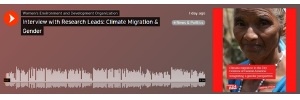
Listen here for a short 10 minute interview with the lead researchers for this report on key lessons:
Stay Informed
Receive updates on our progress, thinking, and strategies as we advocate for gender-just climate, environment, and economic policies around the world.
Resources

Support Our Work
Your donation provides us with the stable foundation we need to build the feminist future we’re working to realize.
Donate Today


